
Reference equipment
Reference antennas.
The reference equipment your contactless test bench is built on — for ISO 10373-6, EMV® and NFC Forum — designed, built and calibrated by cilab, in-house, under ISO/IEC 17025 accreditation.
By standard
Reference antennas for every contactless standard you test against.
Each standards body defines its own reference equipment for analog and RF testing — and we design, build and calibrate it for all three.
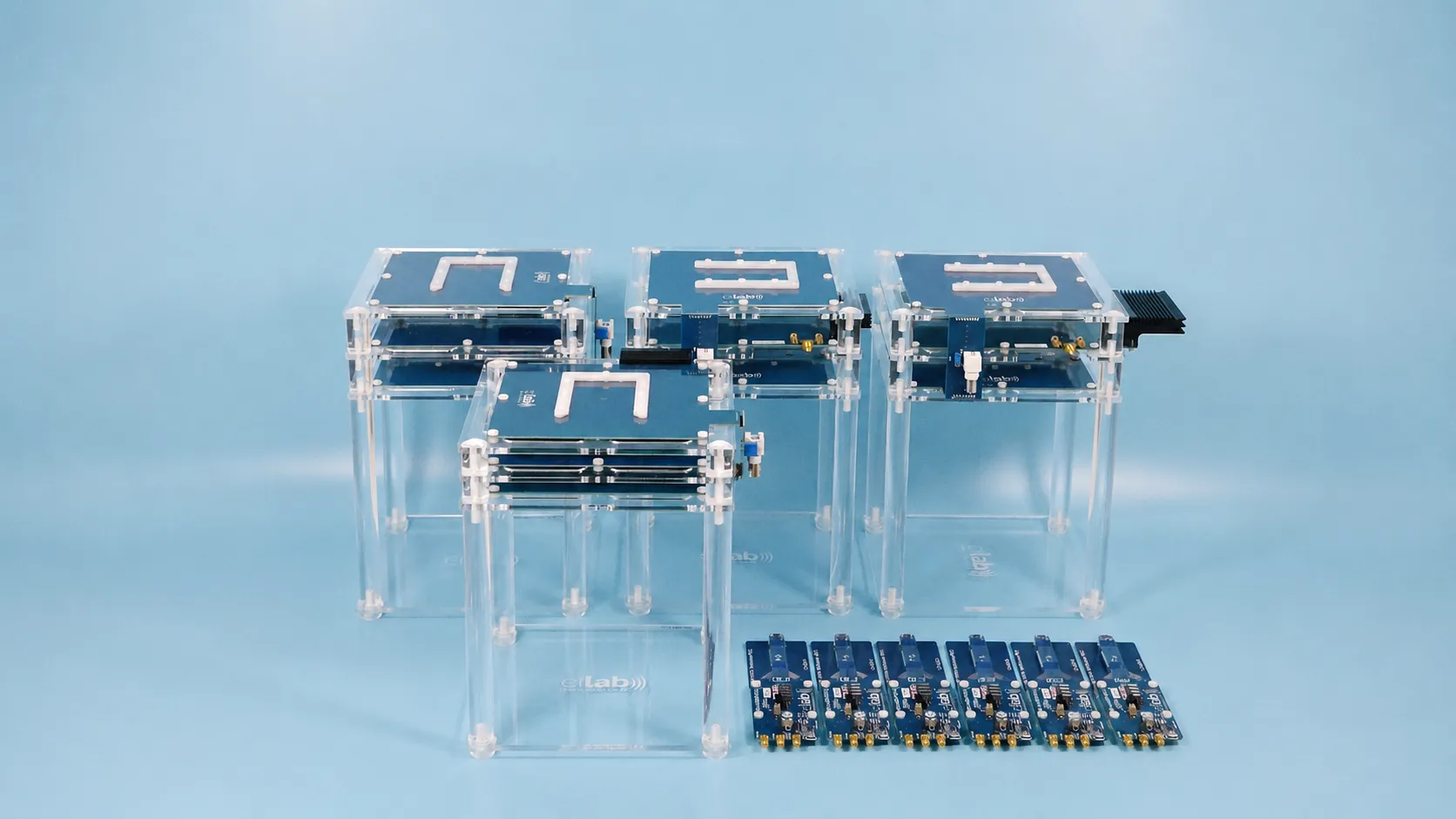
ISO/IEC 10373-6
The full reference set — reference PCD, Class 1 to 6 reference PICCs, calibration coils and our automated AUTO-PICC.
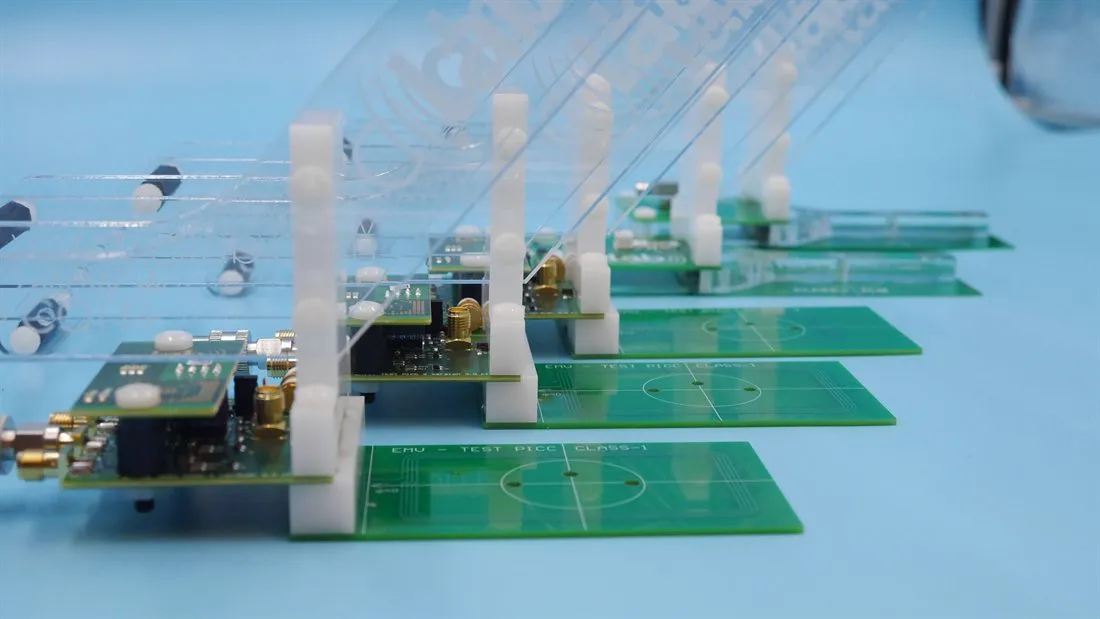
EMV®
Reference PICC and test apparatus for EMV® Level 1 contactless qualification and pre-compliance.
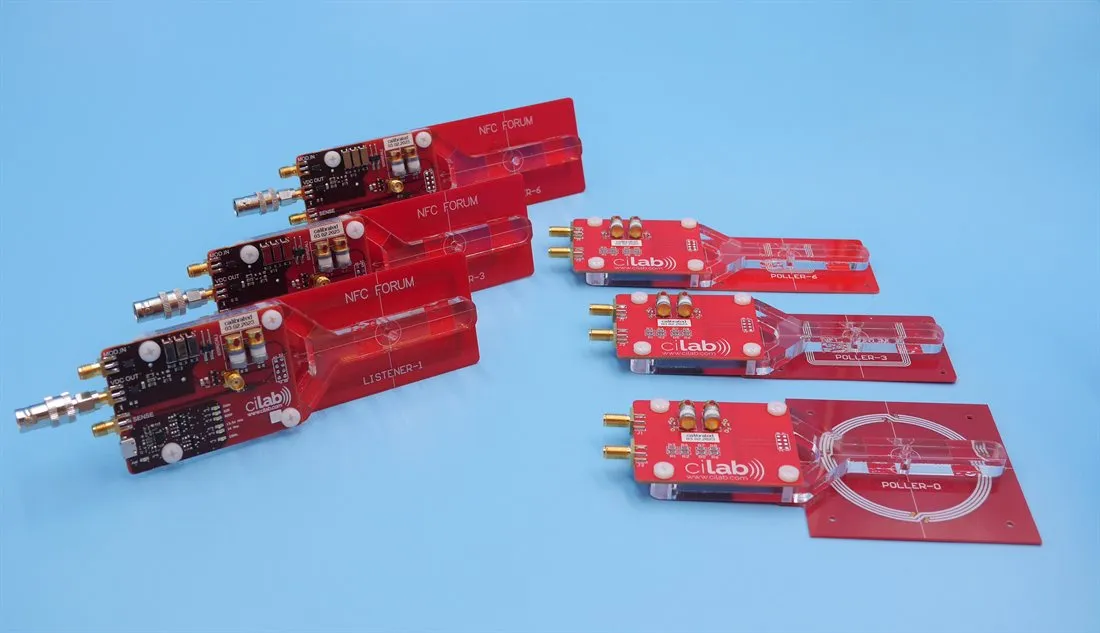
NFC Forum
Reference poller and listener antennas for NFC Forum analog testing.
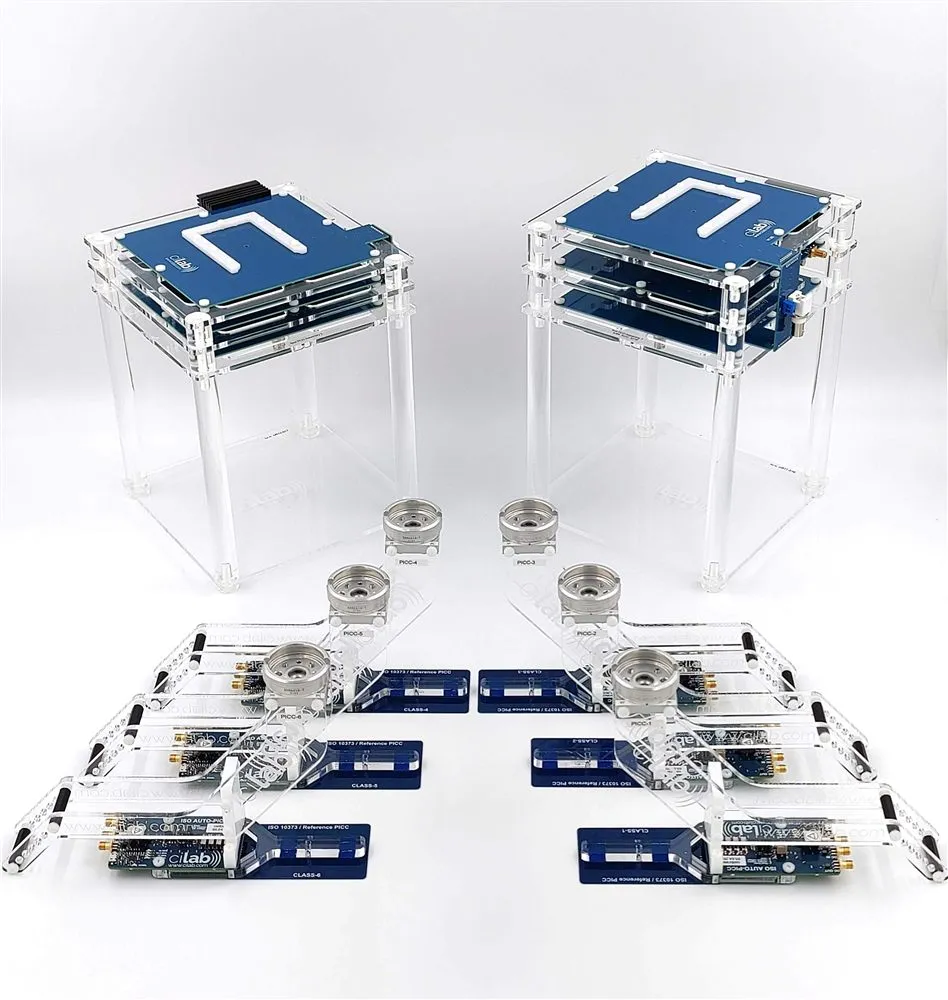
The ISO 10373-6 set
The full ISO 10373-6 reference set, from one maker.
ISO/IEC 10373-6 defines the reference equipment used to test contactless cards (PICCs) and readers (PCDs). We build all of it — and because we calibrate it ourselves under ISO/IEC 17025, you get one supplier, one calibration source and one short turnaround.
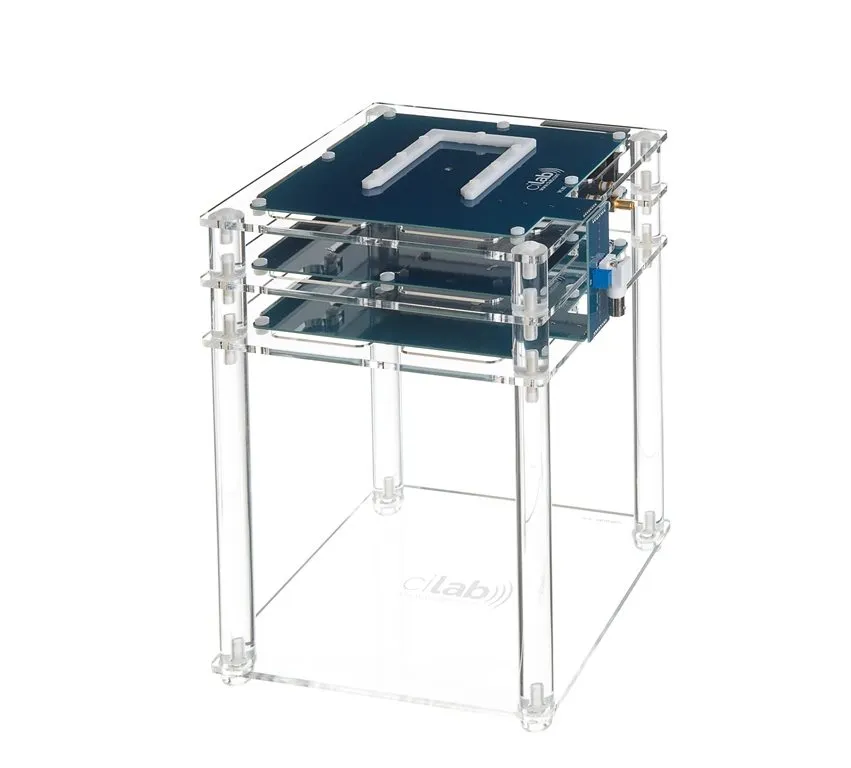
Reference PCD
The reference reader-antenna assembly, built to the ISO 10373-6 reference PCD geometry. It drives a known, calibrated field to test and characterise PICCs — contactless cards and devices.
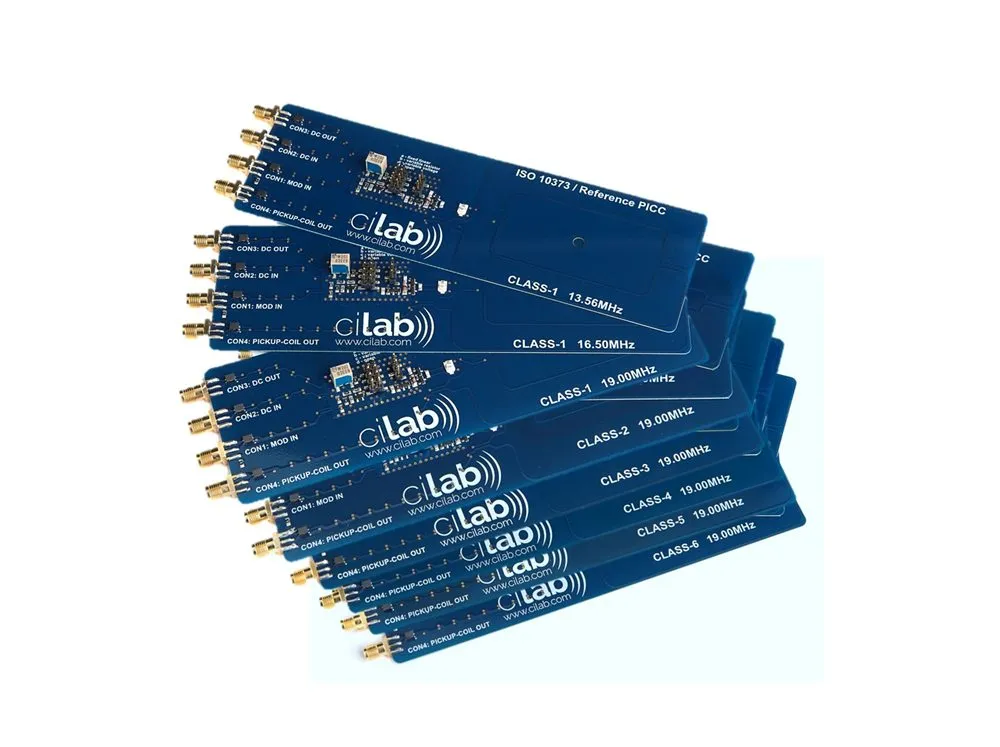
Reference PICC — Class 1 to 6
The reference card antennas, in all six ISO 10373-6 antenna classes. Placed in a reader's field, they test and characterise PCDs across every card form factor.
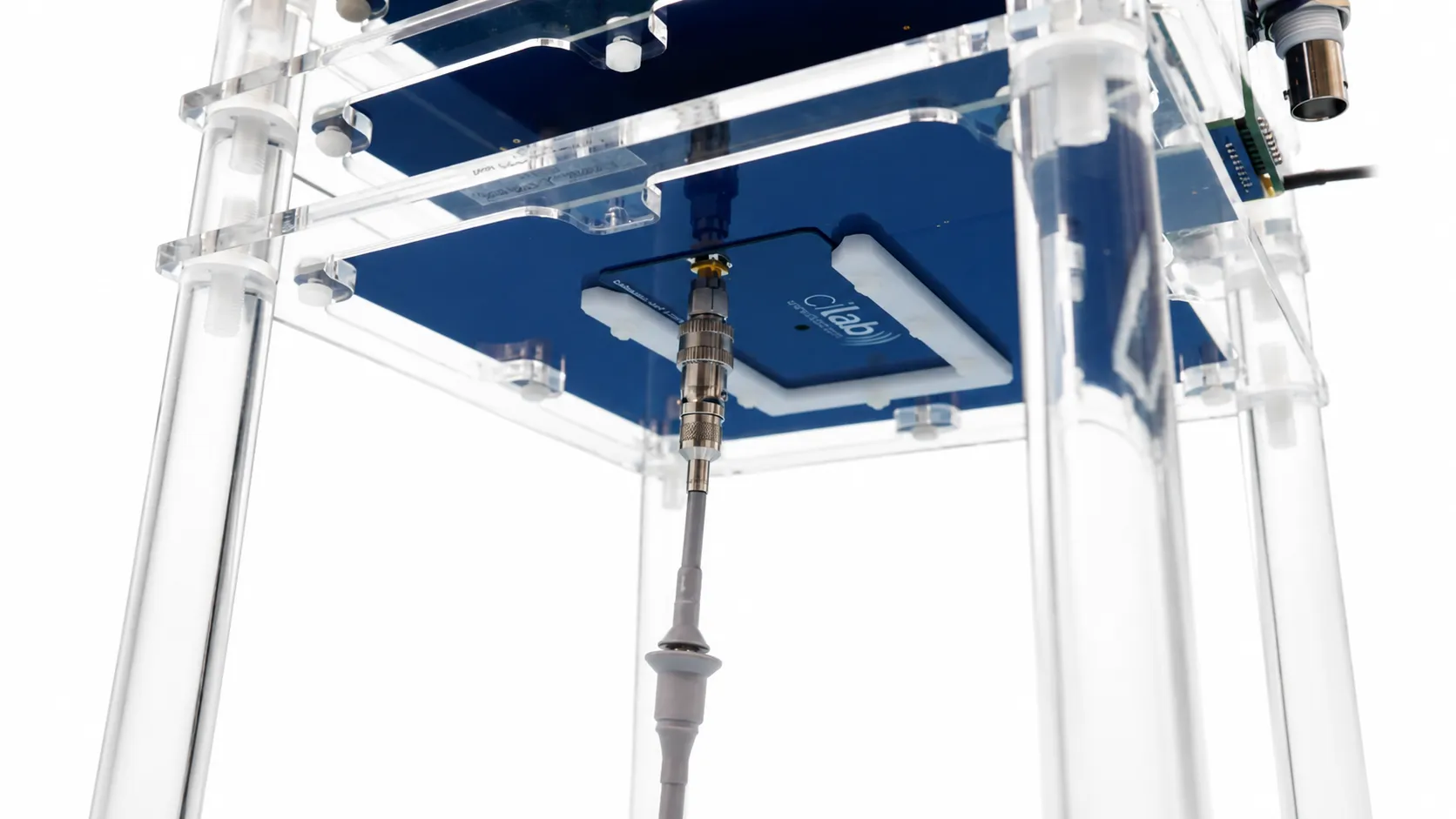
Calibration coils
Calibrate the operating field at the exact device-under-test position, so every analog measurement on the bench is traceable to the standard.
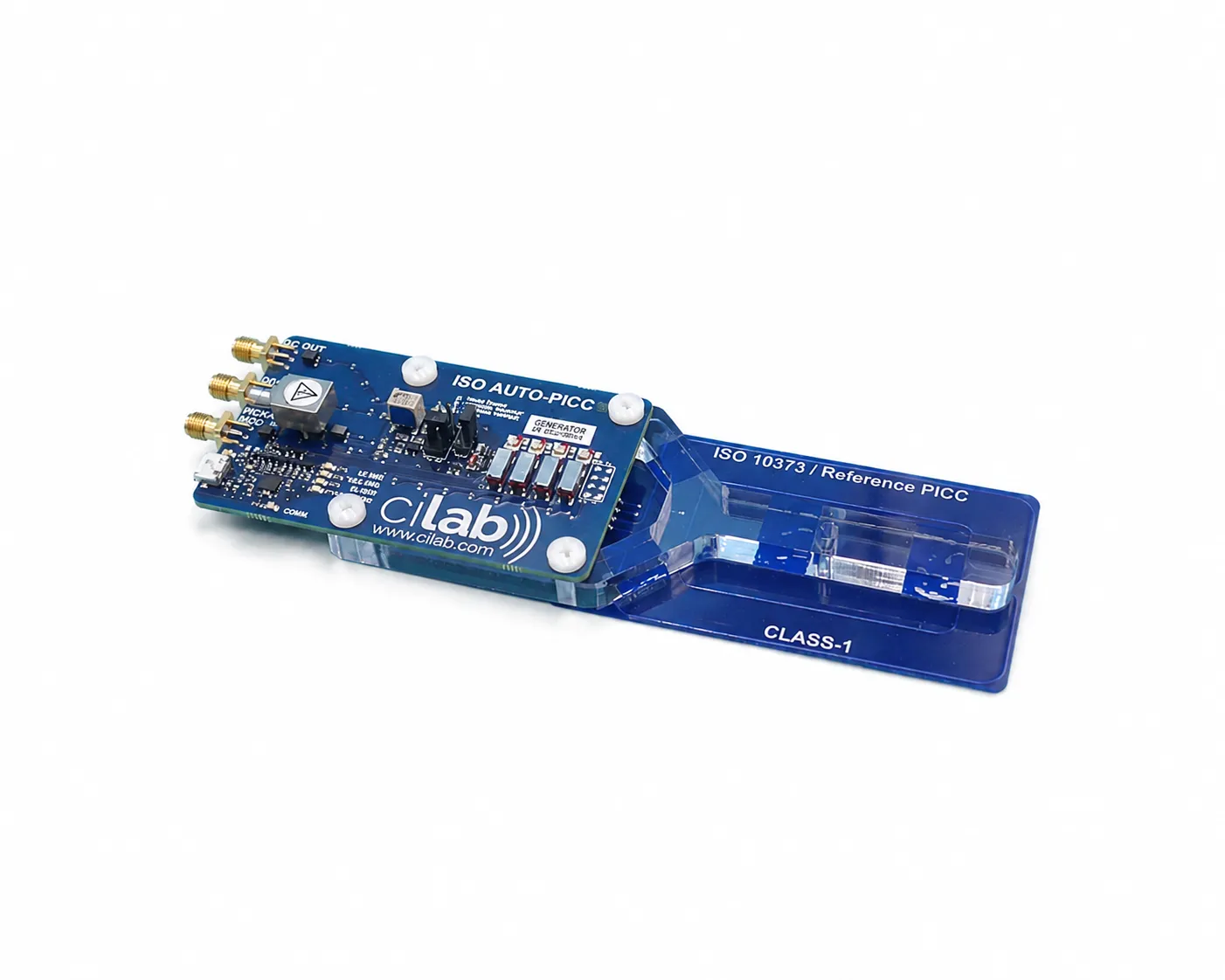
ISO AUTO-PICC
Our automated reference PICC, designed to speed up and standardise PCD test sequences by bringing the reference-PICC steps under software control.
The EMV® set
EMV® Level 1 reference equipment.
For EMV® L1 contactless qualification and pre-compliance: the TEST-PICC and the PICC-side test apparatus, built and calibrated by cilab — and positioned across the full EMV® operating volume on the same bench as the ci230's EMV® L1 test benches.
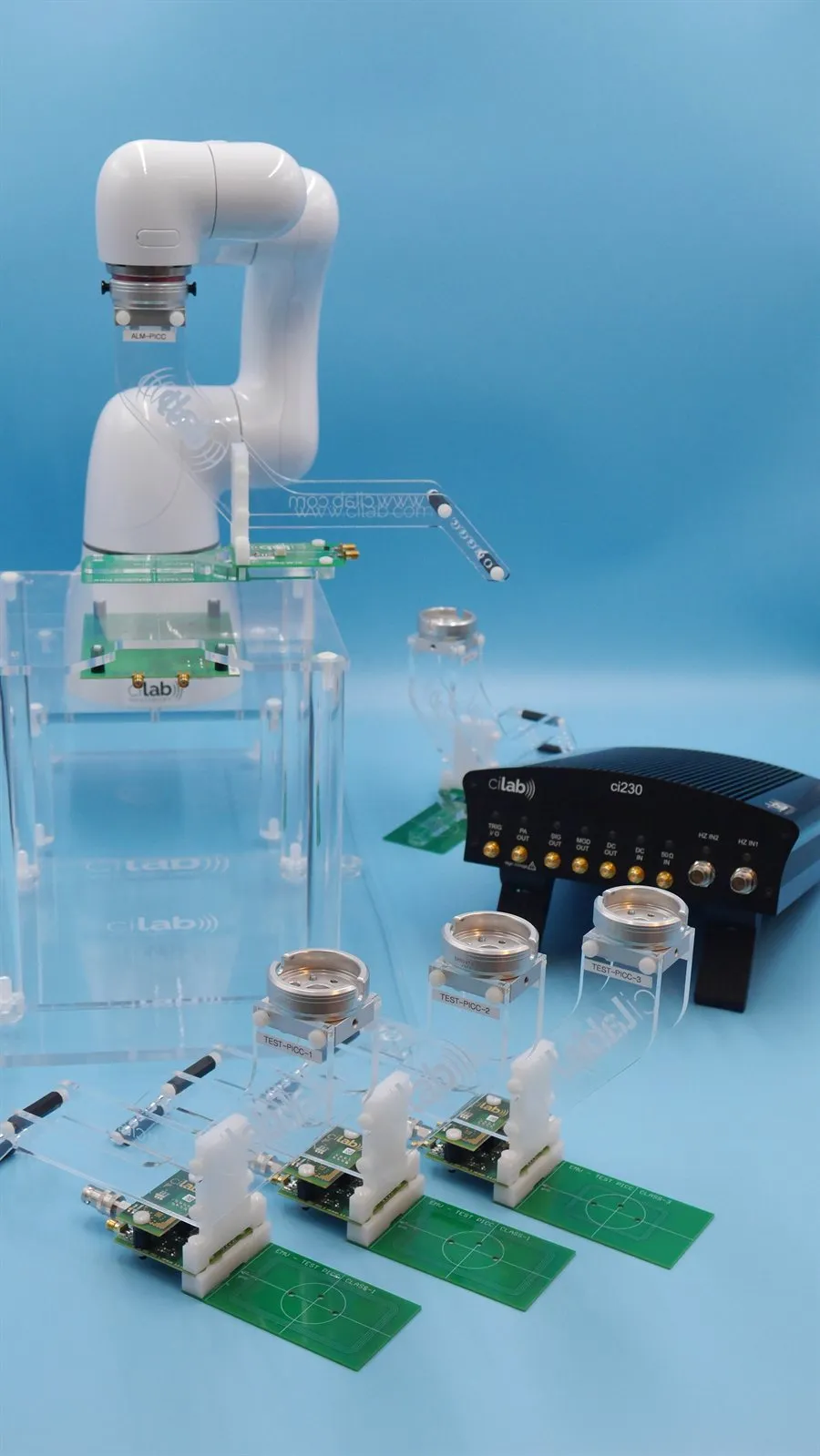
EMV® TEST-PICC
The EMV® reference PICC assembly for qualifying the reader (PCD) side — terminals and POS — with calibrated outputs for the L1 analog measurements.
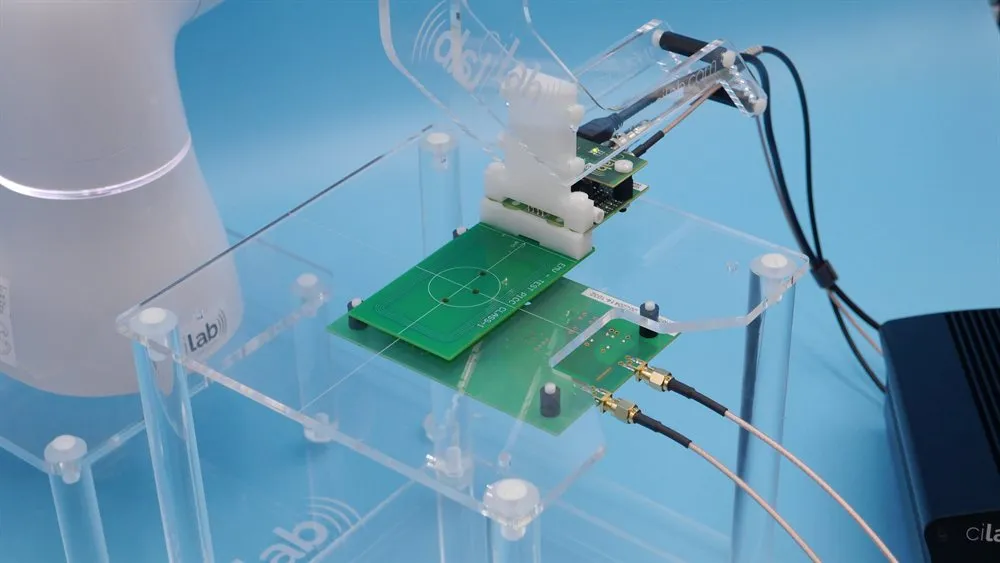
EMV® TEST-PCDs
The EMV® reference reader antennas (TEST-PCDs) for qualifying the card and device (PICC) side against the L1 analog and digital requirements.
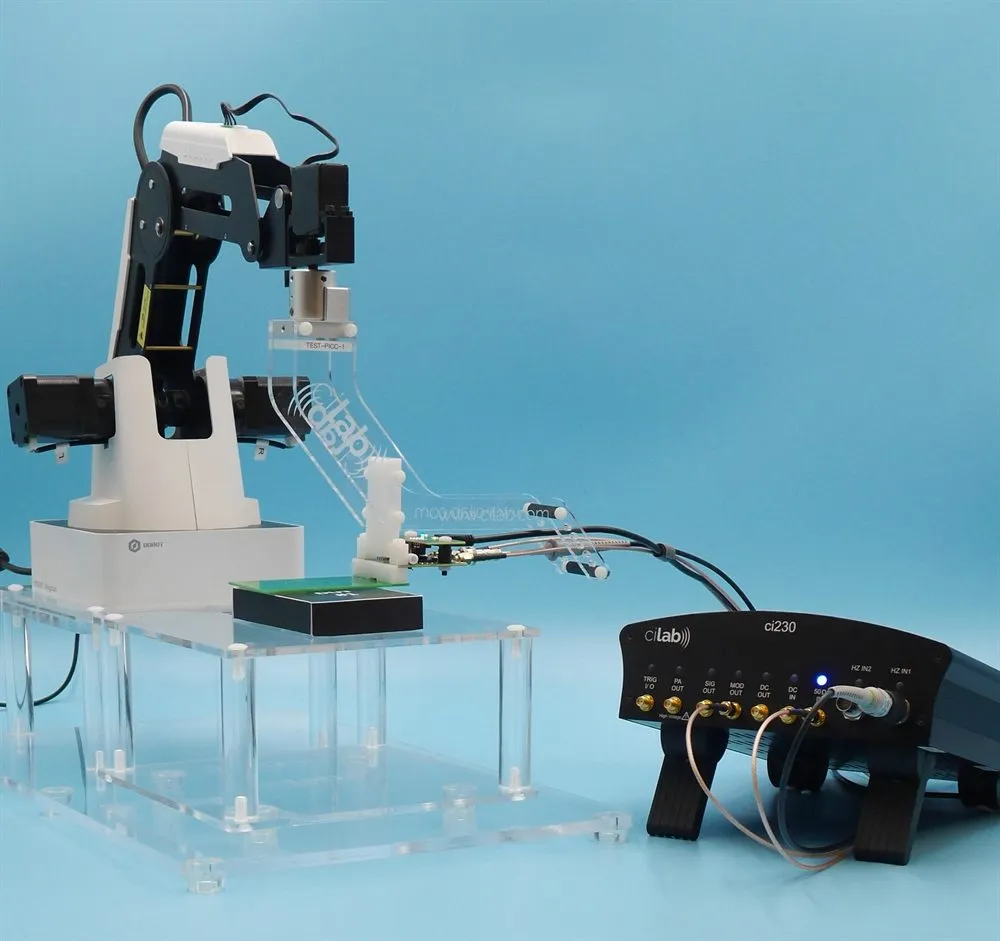
Operating-volume positioning
Fixtures and robot positioning place the reference equipment at every defined position of the EMV® operating volume — repeatably, run after run.
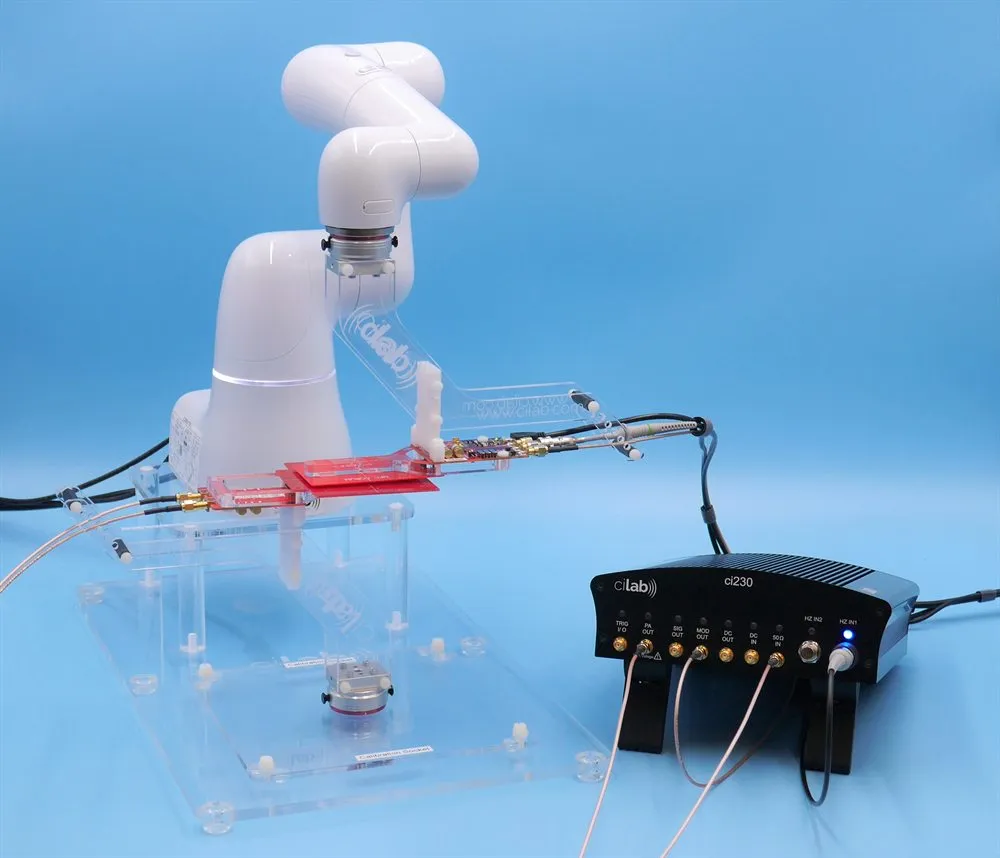
The NFC Forum set
NFC Forum reference antennas for CR15.
The reference poller and listener antennas behind NFC Forum CR15 analog testing — placed across the operating volume and paired with the ci230, an NFC Forum approved test tool.
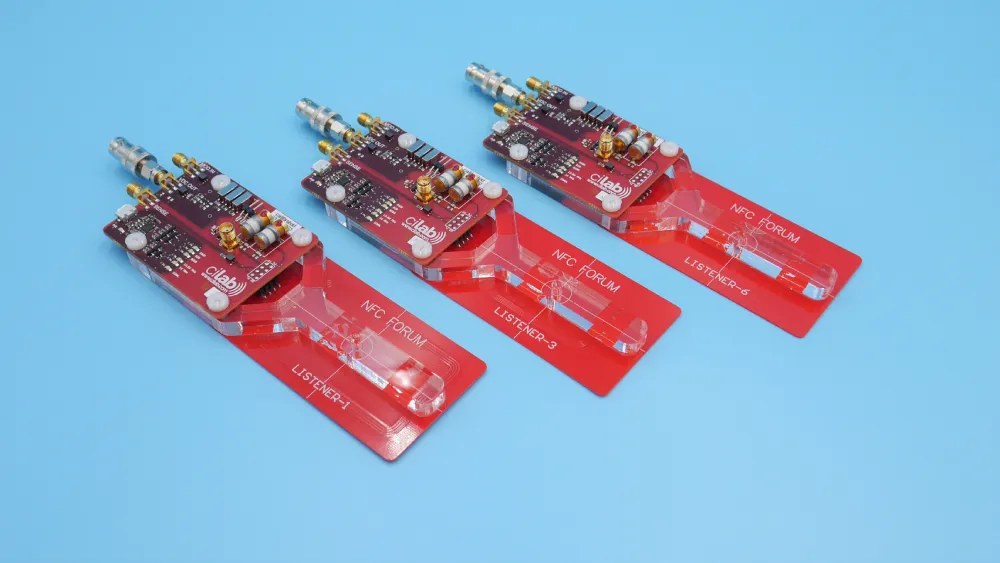
Reference listener antenna
Tests devices in the poller role: the NFC Forum reference listener presents the defined load and measures what the poller delivers across the operating volume.
Reference poller antenna
Tests devices in the listener role: the reference poller generates the defined field and timing of the NFC Forum analog test cases.
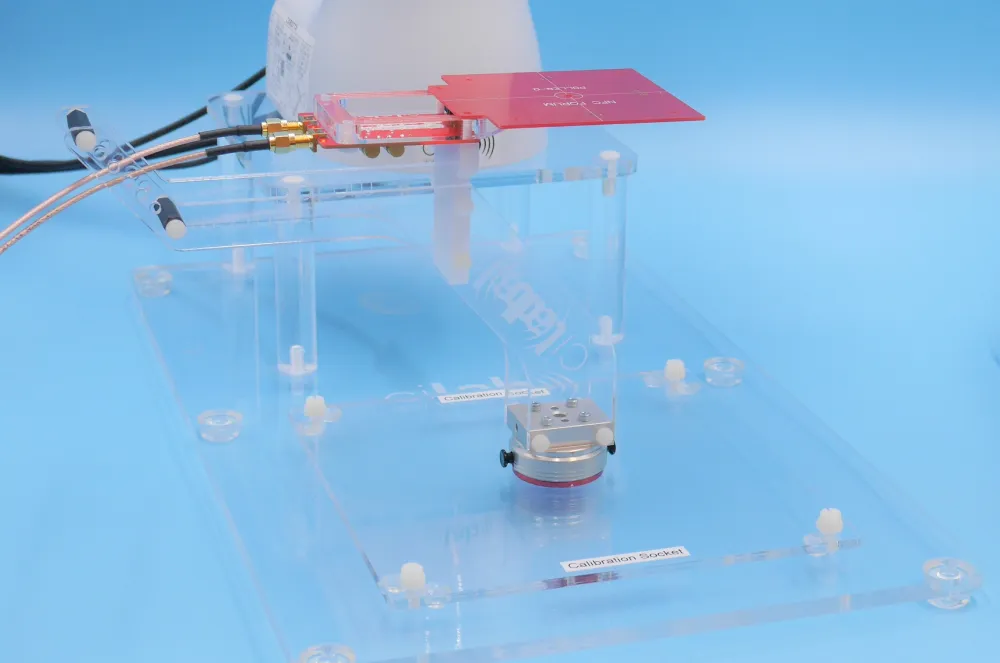
Calibration socket
A defined, traceable reference position to calibrate the setup before each measurement run.
Calibration
Calibrated in-house, back in days.
A reference antenna is only as good as its calibration — and calibration is recurring. Because we are an ISO/IEC 17025-accredited calibration lab, you don't ship your reference equipment through a chain of third parties: we recalibrate it ourselves, typically in 7 to 10 days and guaranteed within two weeks.
- ISO/IEC 17025 accredited calibration
- Typical turnaround 7–10 days, guaranteed within two weeks
- One supplier for the equipment and its calibration
- Traceable, documented results
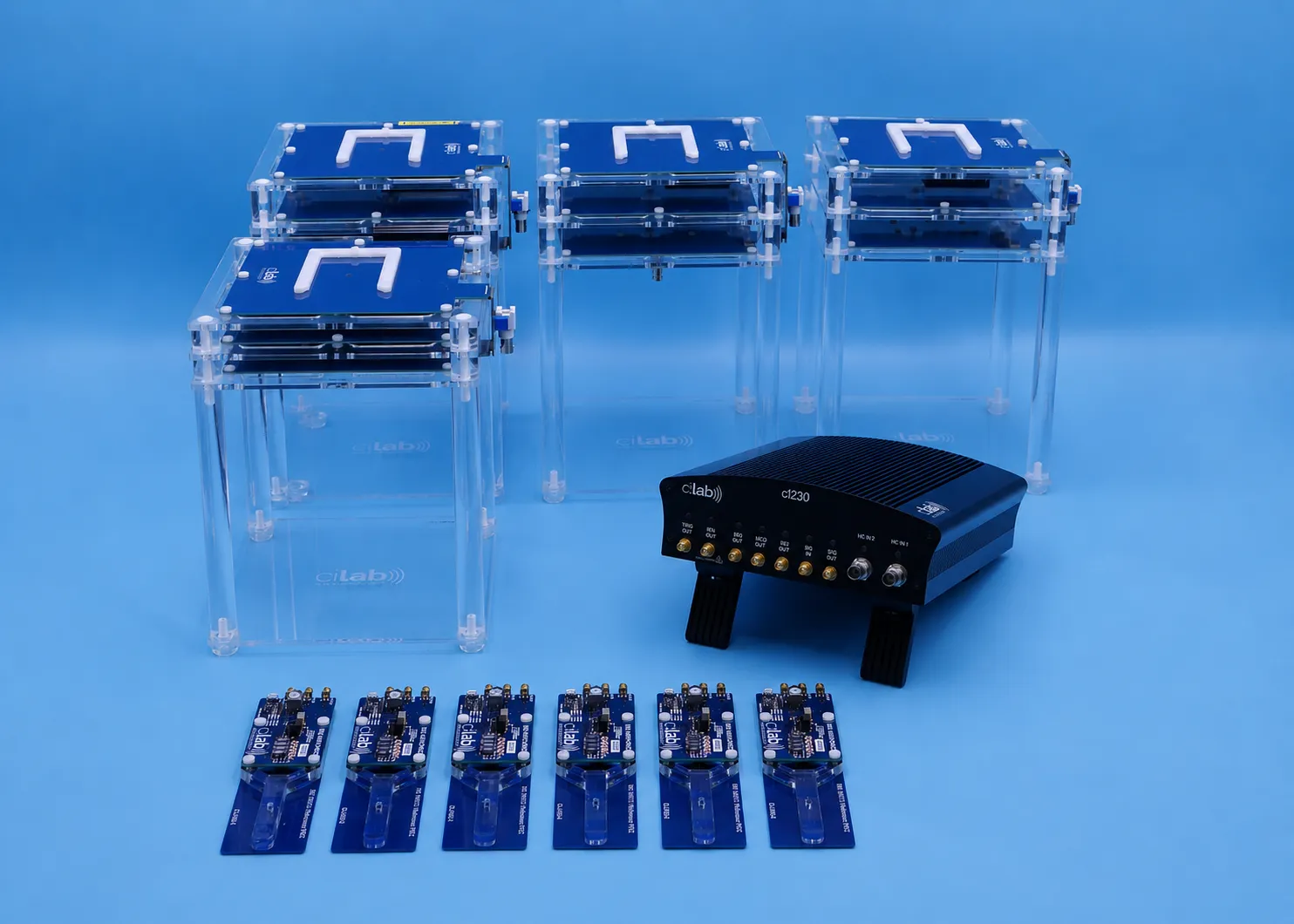
In context
Part of a complete test bench.
The reference antennas pair directly with the ci230 to form a full contactless test bench — reference equipment, instrument and calibration from a single source.
Explore the ci230Need a specific reference configuration?
Tell us which standards, classes and assemblies you need — we'll put together the right reference set and keep it calibrated.
Talk to an expert